
How to become a personal trainer in Surat
The short answer
Train seriously yourself for two or three years before you pay for any course. Then take a certification that gyms here actually recognise, and add a first aid and CPR qualification whichever route you choose. After that, spend real time on a gym floor under somebody experienced, because that is where the job is learned. I have taught on certificate courses since 2013 and hired the graduates, and the trainers who last are almost always the ones who did those three things in that order.
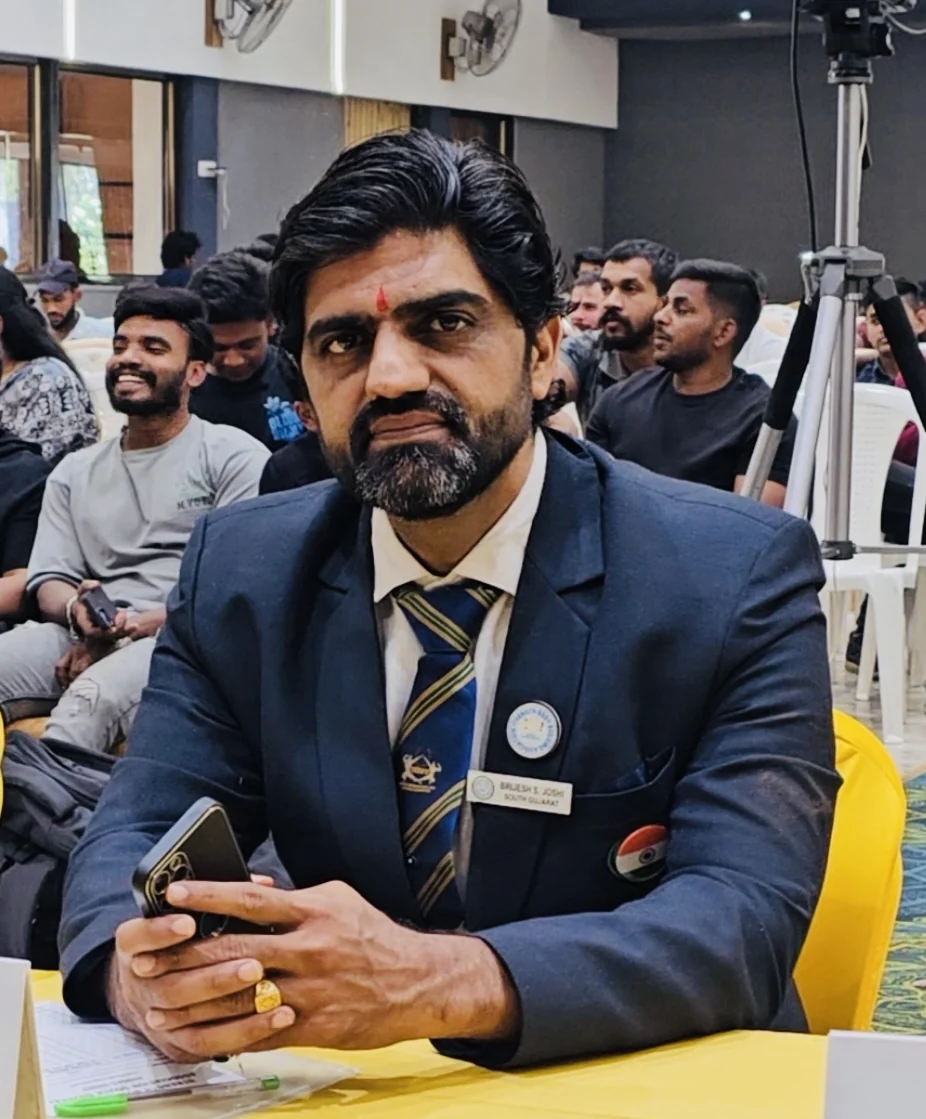
Written byBrijesh Joshi
Founder of S R Gym, Surat, coaching since 1999. President of the Strength Bodybuilding Association South Gujarat and a registered IBBFF judge. See credentials.
- Published
- Reading time
- 5 min read
Brijesh Joshi was appointed a lecturer at a fitness instructor training institute in 2013 and still teaches on certificate courses. He has also hired trainers, and watched a good number of them come through this gym and go on to coach elsewhere. This is the advice he gives when somebody asks how to get in.
Teaching the course, not just holding the certificate
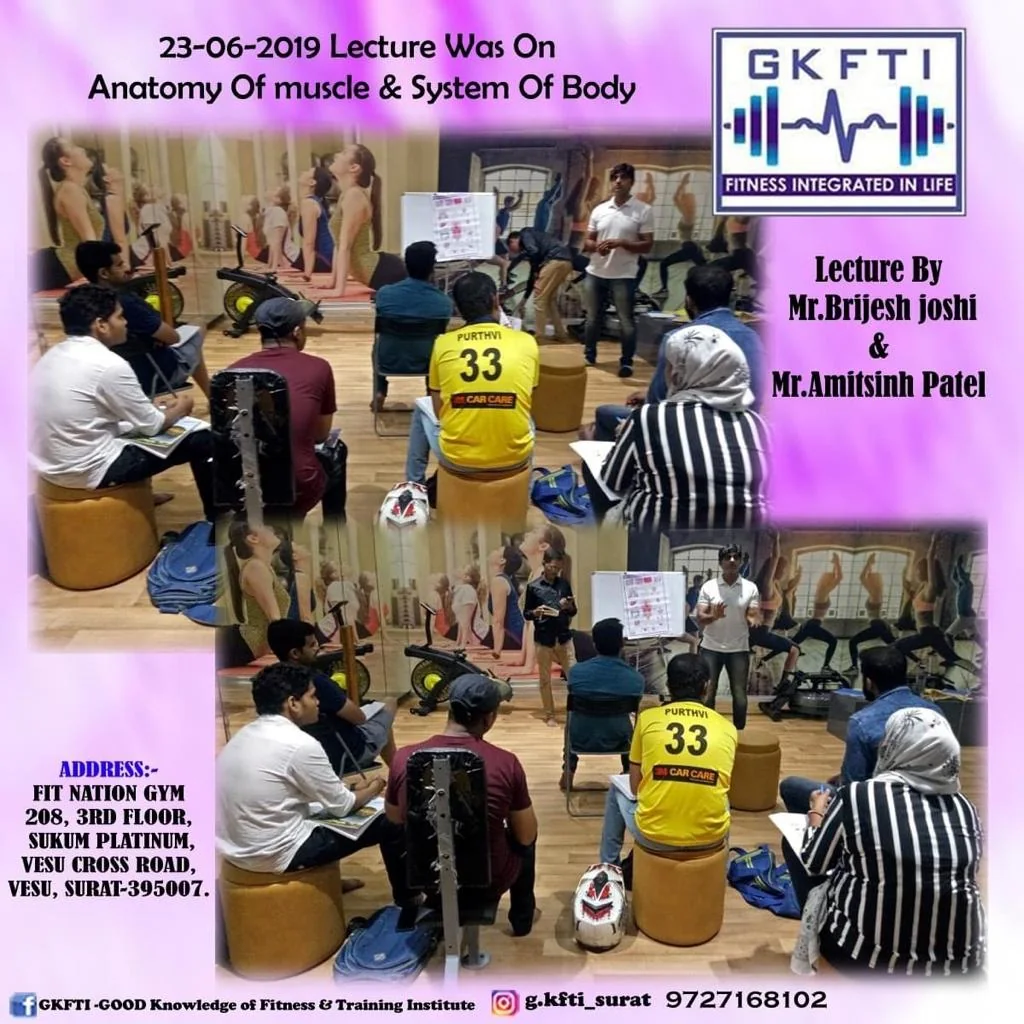
Brijesh is listed as faculty at the G-KFTI Fitness Training Institute, which runs certificate courses in fitness training, gym management, advance fitness training, first aid and CPR, and supplement awareness. Its head office address is the Katargam gym.
He has delivered lectures on anatomy and the systems of the body, and on digestion, nutrition and metabolism. Both are documented onthe credentials page.
Do this before you pay for a course
The most common mistake is buying a certificate first. Somebody decides they want to be a trainer, pays for a course, passes it, and then discovers they cannot demonstrate a deadlift or explain why a client's knee hurts.
Train seriously yourself for two or three years first.Not casually. Follow a programme, log your lifts, get strong, and go through the experience of stalling and working out of it. Almost everything you will later teach, you will teach better because you have felt it.
Learn to coach one person before you coach many. Teach a friend or a family member to squat. Watch how hard it is to explain something you can do without thinking. That gap is the actual job.
Then certify, and choose carefully
There is no legal requirement to hold a certification to work as a trainer in India, which is exactly why the standard varies as much as it does. Choosing well matters more here than it would in a regulated profession.
- Internationally recognised. ACE, ACSM, NSCA and similar carry weight everywhere and are the strongest option if you can manage the cost and the study.
- Established Indian institutes. K11 and comparable bodies are widely recognised by Indian gyms.
- Local certificate courses. Institutes such as G-KFTI in Surat run shorter courses covering fitness training, gym management, first aid and CPR, and supplement awareness. These are accessible and practical, and worth pairing with floor experience.
Before paying anyone, ask three questions. Who accredits this qualification? Do gyms in Surat recognise it? Does the course include supervised practical hours, or is it only theory?
Take a first aid and CPR certification regardless of which route you pick. You are going to be the person in the room when something happens.
Then get on a floor
This is the part no course provides and the part that makes you employable. Work under somebody experienced, in a real gym, with real members who have bad knees and awkward schedules and no interest in your programming philosophy.
Expect to start by inducting new members and correcting technique on the floor rather than by taking your own clients. That period is the apprenticeship, and the trainers who skip it are the ones whose clients leave after a month.
What the job is actually like
Two things surprise most new trainers.
The first is the hours. Clients want early mornings and evenings, because that is when they are free. A trainer's day frequently splits into a block before work and a block after it, with a long gap in the middle. It suits some people and it wears others down.
The second is how much of the work is not about exercise. You will spend more time on adherence, motivation, sleep, stress and getting somebody to eat breakfast than you will on programme design. The technical knowledge is the entry requirement. Keeping people turning up is the actual skill, and it is what separates a trainer who lasts from one who does not.
What earns money, honestly
Not certifications. Retention. A trainer with fifteen clients who stay for two years earns far more, and sleeps better, than one who churns thirty clients a year and is permanently selling.
Retention comes from clients getting results and feeling that somebody is paying attention to them specifically. Everything else is secondary.
If you train at S R Gym
Members of this gym have gone on to work as trainers and to open gyms of their own, and a fitness training institute has run its courses from the Katargam floor. If that is the direction you want to go, say so while you are still training here.
More about trainers who started here, including an open invitation to be listed if you are one of them.
Becoming a trainer: common questions
- How do I become a personal trainer in Surat?
- The realistic path has three parts and they are best done in this order: train seriously yourself for two or three years, take a recognised certification, then spend time on a gym floor under someone experienced. The certificate is the shortest part and the least useful on its own. Employers in Surat hire on whether you can coach a squat, not on which course you paid for.
- Which personal trainer certification is recognised in India?
- Internationally recognised certifications such as ACE, ACSM and NSCA carry the most weight, and reputable Indian options include K11 and similar institutes. There are also local training institutes running certificate courses, including G-KFTI in Surat, where Brijesh Joshi is on the faculty. Check who accredits a course and whether gyms in your city actually recognise it before you pay.
- How much do personal trainers earn in Surat?
- Earnings vary widely and depend far more on client retention than on qualifications. A trainer employed by a gym typically earns a salary plus a share of personal training revenue, while an independent coach charges per client and carries the risk of finding them. The trainers who earn well are almost always the ones whose clients stay for years.
- Do I need a degree to be a personal trainer in India?
- No degree is legally required, which is precisely why the standard varies so much. A degree in physical education or a related science helps and is not the deciding factor. What decides it is competence on the floor and whether people keep coming back.
- Can I learn to be a trainer at S R Gym?
- Brijesh Joshi is faculty at the G-KFTI Fitness Training Institute, whose head office address is the Katargam gym, and he was appointed a lecturer at a fitness instructor training institute in 2013. If you train at S R Gym and want to move into coaching, that is a conversation worth having in person. Call +91 98790 69960.
Want to coach for a living?
Talk to someone who teaches the course and has hired the graduates.