
Steroids and bodybuilding in India
The short answer
I judge bodybuilding at state and national level, I teach steroid and supplement awareness on a trainers' certificate course, and I will not coach steroid use at any level. The evidence is consistent: men followed for eleven years after being caught using had roughly three times the death rate of matched non-users, long-term users have measurably weaker hearts and more coronary plaque, oral tablets are established liver toxins, and a year after a single cycle a third of men in one study still had not recovered their sperm count. Around a third of users become dependent. And more than a third of black-market product tested worldwide turned out to be counterfeit, so you often do not know what you have injected. None of this comes from someone outside the sport.
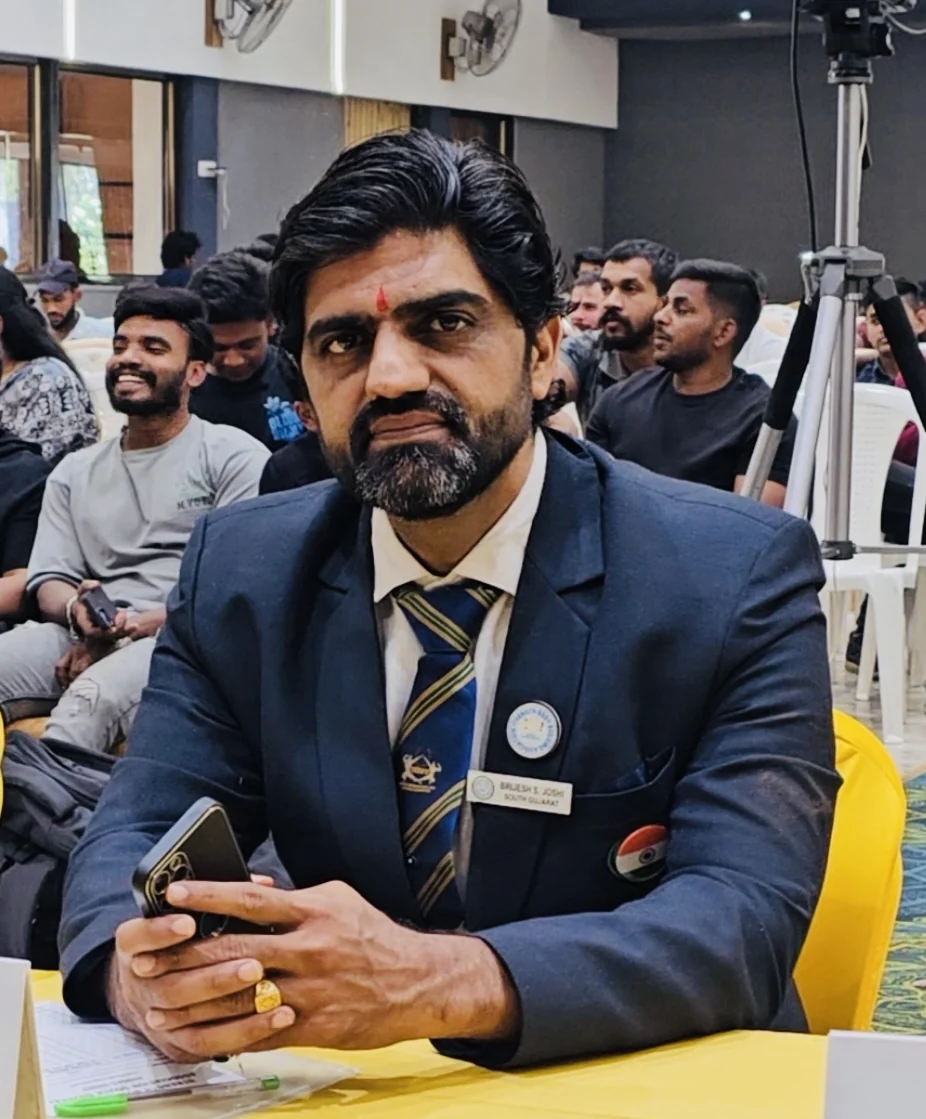
Written byBrijesh Joshi
Founder of S R Gym, Surat, coaching since 1999. President of the Strength Bodybuilding Association South Gujarat and a registered IBBFF judge. See credentials.
- Published
- Reading time
- 13 min read
This is the conversation I have most often with young men, and the one I am most often the only person in the room having. I have set out what the research shows, including the parts that make my argument weaker, because a warning that exaggerates gets ignored the first time it is caught out.
Why I am the one writing this
I am a registered judge with the Indian Body Building & Fitness Federation and I have judged at district, state and national level. I am President of the Strength Bodybuilding Association South Gujarat, which organises the championships across this region. I have coached competitors to medals, and I have been on the officials' table watching the athletes come through.
I also lecture on a fitness trainers' certificate course at the G-KFTI Fitness Training Institute, where steroid and supplement awareness is one of the subjects I teach. So when I write about this, I am not a doctor and I am not a person outside the sport disapproving of it from a distance. I am inside it, and that is precisely why I will not coach it.
Everything below is referenced, and the references are listed at the bottom with what each study actually found. Where the evidence is weaker than I would like, I have said so.
What these drugs are, plainly
Anabolic androgenic steroids are synthetic relatives of testosterone. Used at the doses that circulate in gyms, they are many times what a body produces on its own, and they build muscle faster than training and food can. That part is true, and pretending otherwise is how these conversations lose credibility in the first thirty seconds.
The Endocrine Society, which is the main professional body for hormone specialists, published a formal statement on these drugs. Two things in it are worth carrying. The harms are widely underappreciated, including by doctors. And the great majority of users are not competitive athletes at all. They are ordinary men lifting weights who want to look a certain way.
That second point matches what I see. The person I am usually talking to is not preparing for a stage. He is nineteen or twenty-two, four months into training, and somebody has told him everybody does it.
What the evidence actually shows
Almost all of this research is observational, because no ethics committee will randomise young men to drug abuse. That means it shows strong and consistent association rather than proof of cause in any one person. It is still the best evidence there is, and it points the same way every time.
Dying earlier. A Danish study followed nearly twelve hundred men who had been caught using, matched against almost sixty thousand men of the same age, for about eleven years. The death rate in the users was around three times higher. Part of that gap is disease and part is accidents, violence and suicide, which is itself worth sitting with.
The heart. American researchers scanned the hearts of a hundred and forty experienced weightlifters. The long-term users pumped blood measurably worse, averaging an ejection fraction of fifty-two percent against sixty-three in the non-users, their hearts relaxed less well, and they had more plaque in the coronary arteries. The longer a man had used, the more plaque he had.
The liver. The American National Institutes of Health lists four patterns of liver injury from these drugs: raised enzymes, cholestatic jaundice, peliosis hepatis, which is blood-filled cysts in the liver tissue, and liver tumours appearing after five to fifteen years. The accurate detail, which most warnings get wrong, is that this is concentrated in the oral tablets rather than in injectable testosterone.
Hormones and fertility. When a man takes these drugs the brain stops signalling the testes. In a Dutch study the pituitary hormones became almost undetectable in about ninety-five percent of users, and more than three-quarters had a low sperm count while on cycle. A full year after starting a single cycle, eleven percent still had testosterone below normal and thirty-four percent had not recovered their sperm count.
Years later. Danish researchers examined men who had stopped a median of two and a half years earlier. More than a quarter still had testosterone below the normal range, against none of the comparison group. Four in ten reported low libido, one in four erectile difficulty, one in four depressive symptoms.
Infections. The same Danish group found users had about twice as many hospital visits per year as men their age. A striking share were for skin abscesses and infections, which is not the drug's chemistry at all. That is a needle going into a body in a changing room.
What recovers, and what does not
I want to be accurate here even though accuracy costs me some of the argument, because if I overstate this and somebody catches me, they will discount everything else on this page.
A Dutch study measured men's hearts before, during and after a single cycle. During the cycle the heart wall thickened, the pumping fraction dropped and the filling stiffened. Within about eight months of stopping, those measurements had come back to where they started. Cholesterol, blood pressure and blood thickness followed the same pattern, worsening during use and reversing within three months of stopping.
So the honest statement is that one cycle does not usually leave permanent damage to the heart. What did not reliably return, in the same research group's work, was hormone function and fertility.
My concern was never the single cycle. It is the man who does this twice a year for ten years, whose coronary plaque accumulates with lifetime dose, and who by thirty-five is a different set of numbers from the one he started with. That accumulation is the part nobody plans for, because nobody starts intending to still be doing it in a decade.
Mood, dependence and the part nobody warns you about
There is one properly blinded trial on mood, which is rare in this field. Fifty-six men received testosterone or placebo without knowing which. Most, eighty-four percent, had almost no mood change. Twelve percent became mildly hypomanic. Four percent became markedly so, and one man was withdrawn from the study early because his symptoms were escalating.
The number that matters there is not the eighty-four percent. It is that there was no way to know in advance which men would be in the four percent. Anyone telling you they know how they will react is guessing with their own temperament.
On dependence, the American National Institute on Drug Abuse puts it at around thirty-two percent of people who misuse these drugs. The dependence is not the same as with alcohol; it attaches to the mirror. Withdrawal brings fatigue, insomnia, loss of appetite, loss of sex drive and depression, and that agency describes the depression as the most dangerous part because it sometimes leads to suicide attempts.
Read that alongside the Danish mortality finding, where a large share of the excess deaths were from accidents, violence and suicide rather than from disease. These two things are talking to each other.
If you are under twenty
There is a specific harm here that the people selling this never mention, and it is permanent.
In someone still growing, artificially high sex hormone levels can signal the growing bones to close early. A seventeen-year-old chasing a bigger chest can end up a permanently shorter man. There is no undoing that afterwards.
Beyond that, a teenager has not yet found out what his own body will do with two or three years of proper training and proper eating. That is the part being skipped, and it is also the part that would have taught him everything he needs for the next thirty years.
You do not know what is in the vial
Scientists have actually tested this. A review pooled nineteen studies covering more than five thousand black-market steroid samples seized in Brazil and Europe. Around thirty-six percent were counterfeit and around thirty-seven percent were substandard. Among the defective ones, nearly a quarter contained no active drug at all, and forty-four percent contained a completely different drug from the one on the label.
There is no equivalent Indian analysis, so I cannot give you a figure for what circulates here. What has been reported is enforcement: police in Greater Noida arrested three men in their twenties in 2021 for buying raw chemicals in Haryana and pressing them into tablets and vials under fake foreign labels, with similar unlicensed operations uncovered elsewhere in the region. That is press reporting of police action rather than research, and I am labelling it as such.
Put those together. A man decides to accept a set of known health risks. What he actually receives is a vial with a one-in-three chance of not being what the label says, made by someone with no pharmaceutical training, in conditions nobody inspected. Whatever calculation he thought he was making, that is not it.
Who is actually selling it to you
There is very little proper research on steroid use in Indian gyms. The one study I can point to surveyed seventy-four bodybuilders in Bhubaneswar, and I want to be careful with it: those men were recruited inside bodybuilding gyms precisely because they were users, so it tells you nothing at all about how common this is across India.
What it does tell you is who put them on it. Seventy percent said a trainer had persuaded them.
That is the finding I would most like every reader to carry away, because it changes what question you ask. The man handing this to a twenty-year-old is frequently the man that twenty-year-old is paying for guidance. When you arechoosing where to train, ask the trainer directly what he thinks about steroids and listen to how he answers. It is one of the more revealing questions you can ask in a first conversation.
If you are already using
Nothing on this page is written at you, and I am not interested in lecturing somebody who is already in it. The useful thing I can say is short.
See a doctor, ideally an endocrinologist, and tell them honestly what you have taken and for how long. Stopping abruptly on your own has its own problems, including a withdrawal depression that health agencies treat as the most dangerous part of the whole picture. A blood panel will tell you where your hormones, liver, cholesterol and blood count actually are, which is worth knowing whatever you decide next.
A gym is not the place to manage that, and a coach is not qualified to. What I can do is keep training you properly while you sort it out with somebody who is.
What natural training gets you instead
The honest version: slower. Two to three years of consistent training and proper eating puts most men in a position they would not recognise from where they started, and it does not put them in a position of having to maintain something chemically for the rest of their life.
It also teaches you the thing the shortcut skips. How your own body responds to training, to food, to sleep, to stress. That knowledge is what lets a man still be training well at fifty, and it is not available any other way.
The approach we use here is set out in full onthe S R Gym method, and for anyone looking at competing,competing in South Gujarat covers what the shows actually ask of you.
The research this page rests on
Each entry states what the study actually found, including where the finding is weaker or more limited than the argument on this page would prefer. Where no reliable Indian data exists, that is said rather than filled in with a plausible number.
Mortality among users of anabolic steroids
JAMA, Windfeld-Mathiasen J and colleagues, 2024 · Nationwide register cohort, 1,189 men matched to 59,450 controls, followed about 11 years
All-cause death rate was 2.8 times higher in the men sanctioned for steroid use than in matched controls. The excess came from accidents, violence and suicide as well as from disease. This is an observational study, so it establishes a strong association rather than proving the drugs alone caused every death.
Cardiovascular toxicity of illicit anabolic-androgenic steroid use
Circulation, Baggish AL and colleagues, 2017 · Cross-sectional study of 140 male weightlifters
Long-term users pumped blood measurably worse than non-users, with an average ejection fraction of 52 percent against 63 percent, their hearts relaxed less well, and they had more plaque in their coronary arteries. Plaque volume rose with lifetime dose. Being a snapshot rather than a follow-up, it cannot prove the direction of cause.
Anabolic androgenic steroids induce reversible left ventricular hypertrophy and cardiac dysfunction
Frontiers in Reproductive Health, Smit DL and colleagues (HAARLEM study), 2021 · Prospective cohort, hearts measured before, during and after one cycle
During a cycle the heart wall thickened, the pumping fraction fell and filling became stiffer. Within roughly eight months of stopping, those measurements returned to baseline. Included here deliberately: a single cycle does not usually leave permanent heart damage, and saying otherwise would be dishonest.
National Institute of Diabetes and Digestive and Kidney Diseases, National Institutes of Health, Continuously updated reference · Government evidence synthesis
Four patterns of liver injury are described: raised liver enzymes, cholestatic jaundice, peliosis hepatis, which is blood-filled cysts in the liver, and liver tumours appearing after five to fifteen years of use. The risk is concentrated in the 17-alpha-alkylated oral tablets rather than in injectable testosterone esters.
Disruption and recovery of testicular function during and after androgen abuse
Human Reproduction, Smit DL and colleagues (HAARLEM study), 2021 · Prospective cohort of 100 amateur athletes
The brain's signal to the testes became almost undetectable in about 95 percent of users during a cycle, and more than three-quarters had a low sperm count. Most recovered, but one year after starting a single cycle, 11 percent still had testosterone below normal and 34 percent had not recovered their sperm count.
PLOS ONE, Rasmussen JJ and colleagues, 2016 · Cross-sectional case-control study
Men who had stopped a median of two and a half years earlier still had lower testosterone than controls, and around a quarter were below the normal range, against none of the comparison group. Low libido, erectile difficulty and depressive symptoms were all more common. A small study that cannot prove cause.
Effects of supraphysiologic doses of testosterone on mood and aggression in normal men
Archives of General Psychiatry, Pope HG Jr and colleagues, 2000 · Randomised, double-blind, placebo-controlled crossover trial
Most men, 84 percent, had almost no mood change. Twelve percent became mildly hypomanic and four percent markedly so, with one participant withdrawn early as his symptoms escalated. There was no way to predict in advance which men would react that way.
Anabolic steroids and other appearance and performance enhancing drugs
National Institute on Drug Abuse, National Institutes of Health, Current agency guidance · Government health agency evidence summary
Around 32 percent of people who misuse these drugs become dependent on them, with withdrawal bringing fatigue, insomnia, loss of appetite, loss of sex drive and depression, which the agency calls the most dangerous symptom because it sometimes leads to suicide attempts. It also warns that in a still-growing adolescent, artificially high sex hormone levels can signal the bones to stop growing early.
Fake anabolic androgenic steroids on the black market: a systematic review and meta-analysis
BMC Public Health, Magnolini R and colleagues, 2022 · Systematic review and meta-analysis of 19 studies covering over 5,400 seized samples
About 36 percent of samples were counterfeit and about 37 percent substandard. Among the defective products, roughly a quarter contained no active drug at all and 44 percent contained a different drug from the one on the label. The samples came from Brazil and Europe; no comparable Indian analysis exists.
International Journal of Preventive Medicine, Pany S and colleagues, 2019 · Cross-sectional survey of 84 bodybuilders in Bhubaneswar
Of the users surveyed, 70 percent said a trainer had persuaded them to start. The sample was recruited inside bodybuilding gyms precisely because those men were users, so it says nothing about how common steroid use is in India generally. The finding about who introduces it is the part worth carrying.
Endocrine Reviews, Pope HG Jr and colleagues, 2014 · Professional society scientific statement
The main professional body for hormone specialists states that the harms of these drugs are widely underappreciated, including by doctors, and that the great majority of users are not competitive athletes but ordinary men lifting weights for appearance.
The global epidemiology of anabolic-androgenic steroid use
Annals of Epidemiology, Sagoe D and colleagues, 2014 · Meta-analysis of 187 studies
Lifetime use worldwide was estimated at 6.4 percent of men, with Asia listed at 0.2 percent. That Asian figure almost certainly reflects how little research has been done in this part of the world rather than genuinely low use, which is why no honest page can tell you how common this is in India.
Steroids: the questions I actually get asked
- Are steroids common in Indian gyms?
- Nobody can honestly give you a number for India. The largest global analysis put lifetime use at about six percent of men worldwide and listed Asia at zero point two percent, which reflects how few studies have been done here rather than genuine rarity. What is documented is that in one survey of bodybuilders in Bhubaneswar, seventy percent of the users said a trainer had persuaded them to start.
- What are the long-term side effects of anabolic steroids?
- The best-evidenced ones are cardiovascular and hormonal. Long-term users in one study had a measurably weaker pumping heart and more coronary plaque, with more plaque the longer they had used. Oral tablets are established liver toxins and are linked to tumours after five to fifteen years. The body's own testosterone and sperm production shut down during use and do not always fully recover. In a Danish register study following men for about eleven years, the death rate was around three times higher than matched non-users.
- Does one steroid cycle cause permanent damage?
- Usually not to the heart, and I would rather tell you that than exaggerate. A Dutch study measured men before, during and after a single cycle and found the heart changes, cholesterol and blood pressure all returned to baseline within months of stopping. What did not always return was hormone function: a year after starting, eleven percent still had testosterone below normal and thirty-four percent had not recovered their sperm count. The greater risk is the man who repeats cycles for a decade.
- Do steroids affect fertility?
- Yes, and this is the consequence that reaches the most people. During a cycle the pituitary signal to the testes becomes almost undetectable in around ninety-five percent of users, and more than three-quarters have a low sperm count. Most recover within months. In the same study, a third had still not recovered their sperm count a full year after starting one cycle. If you are planning a family, this is a conversation to have with a doctor rather than with somebody at a gym.
- Can you compete in bodybuilding without steroids?
- Yes, and Brijesh coaches competitors on that basis. He is a registered judge with the Indian Body Building & Fitness Federation and has coached medal winners at district and state level. The coaching covers training, diet, posing and recovery, and it stops there. If you want a pharmacological plan, he will tell you directly that this is the wrong gym.
- What should I do if I have already been using steroids?
- See a doctor, ideally an endocrinologist, and be honest with them about what you have taken. Stopping abruptly without medical guidance has its own problems, including a withdrawal depression that health agencies treat as the most dangerous part. A gym is not the place to manage that. Bring the information to a doctor and let them work with you.
This page is general information written by a coach and bodybuilding judge, and it is not medical advice. It deliberately contains no information about how these drugs are used, because that is not something a gym should publish. If you are using or have used anabolic steroids, see a doctor.
Train without them
Including if you want to compete. Both branches in Surat, and online. Call +91 98790 69960.