Starting, or starting again, after 40

A good share of the people training at S R Gym are past forty, and a number are considerably older. Some are returning after twenty years away. Some have never lifted anything heavier than a suitcase.

The gym has been open since 1999, which means Brijesh Joshi has coached people through this stage repeatedly rather than occasionally.

Coached by someone certified for it

Training an adult in their fifties who has hypertension and a twenty-year gap is a different task from training a twenty-two year old, and it is one people get wrong in both directions: either too cautious to achieve anything, or loaded as though nothing had changed.

Brijesh Joshi holds a special population training certificate from Dr Mahesh Kumar's Medical Institute, alongside an advance fitness personal trainer certificate from the same institute. Both are reproduced in full on the credentials page, along with his other qualifications.

Certificate
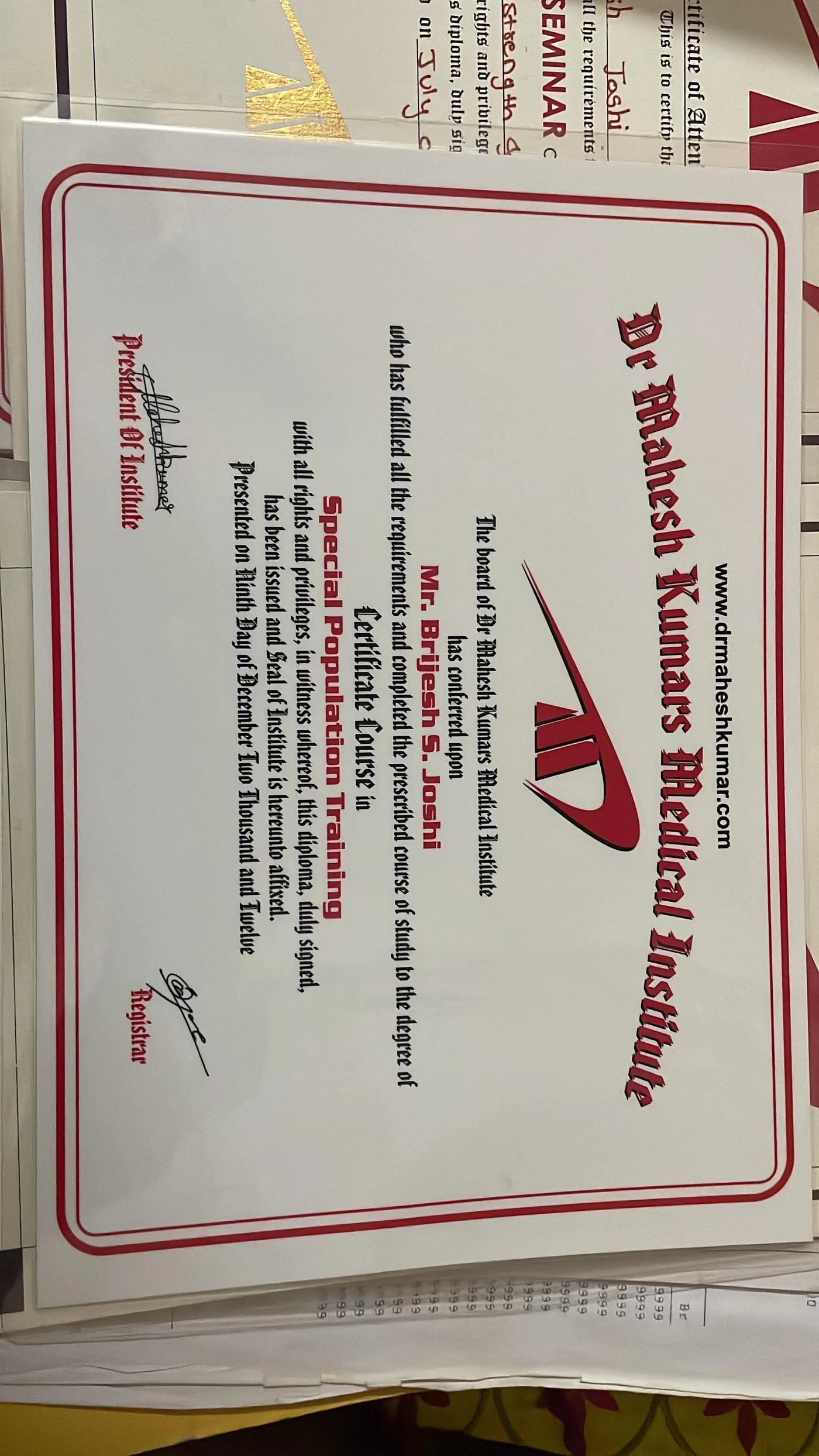
Special population training certificate issued to Brijesh S. Joshi by Dr Mahesh Kumar's Medical Institute
Special population training, Dr Mahesh Kumar's Medical Institute.

What actually changes after forty

Less than people fear, and in different places than they expect.

  • Muscle is lost steadily unless you train. This is the one that matters most, because muscle is what makes stairs, shopping and getting out of a low chair possible in your seventies.
  • Recovery takes longer. So the programme uses fewer hard sessions with more time between them, which suits a working schedule anyway.
  • Old injuries have opinions. A shoulder from a decade ago dictates which pressing variation you use. It rarely rules pressing out.
  • Progress is steadier, not absent. Load still goes up. It goes up in smaller steps and over longer periods.

What does not change is that the training works. Resistance training produces strength and muscle gains at every age that has been studied, including in people in their eighties.

Health conditions, handled properly

Many members over forty are managing something: blood pressure, diabetes, thyroid, cholesterol, a knee, a back. Exercise is frequently part of the medical advice for these rather than a risk to it.

The arrangement that works is straightforward. Tell your doctor you intend to train and ask what to watch for. Tell your coach what the doctor said. The programme is then built with that information rather than around it.

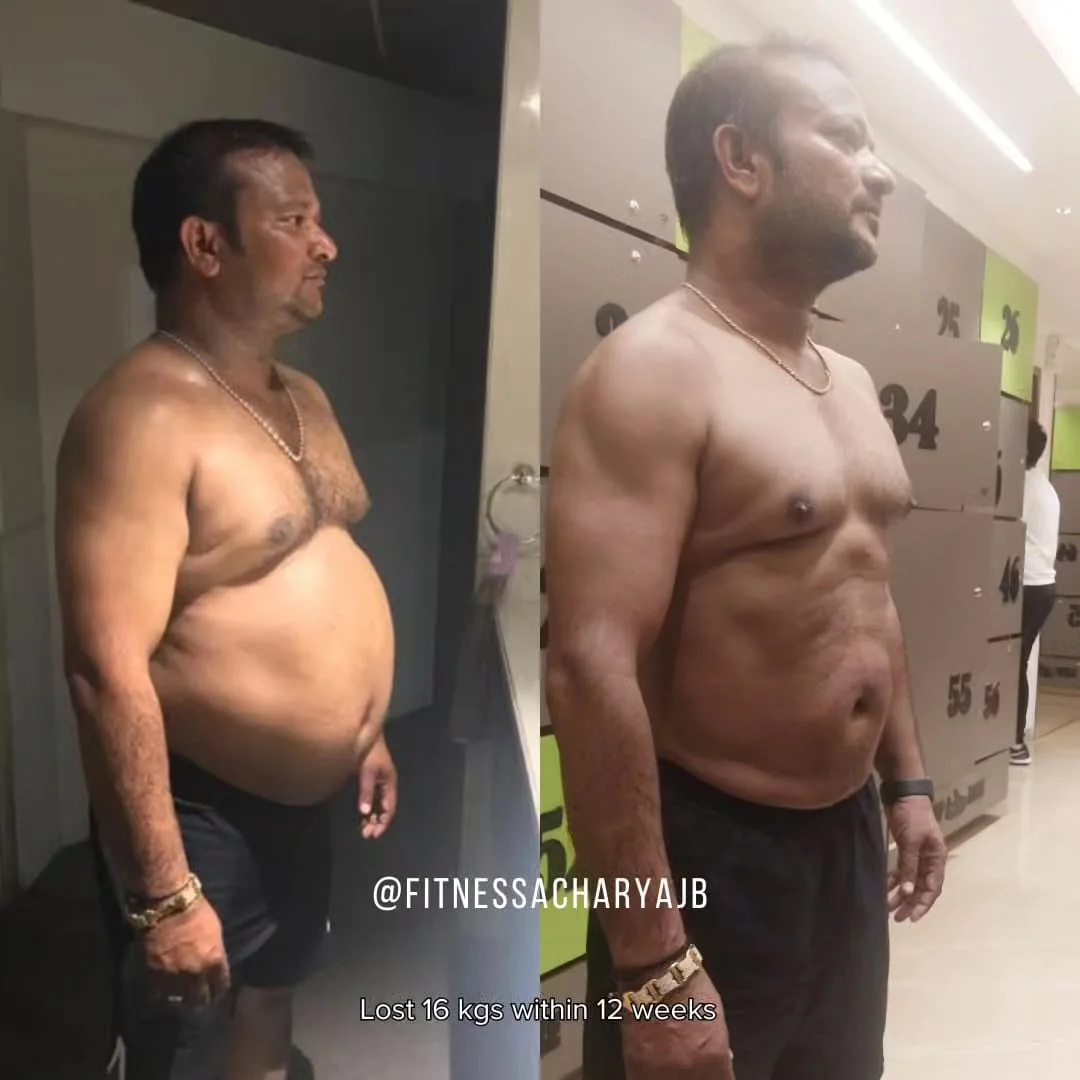
One member, a real estate developer in his fifties, reported that his cholesterol returned to normal range over the course of losing 16 kg in twelve weeks, alongside better energy and no more breathlessness on stairs. That is his account of his own results, and his doctor rather than his gym is the one who measured it.

What the first month looks like

  1. A longer conversation than usual. Medical history, old injuries, medication, what your doctor has said.
  2. Movement before load. Two to three weeks learning patterns with very light weight. Slower than a twenty-year-old would need, and it is what makes month six possible.
  3. Two to three sessions a week. Enough stimulus, enough recovery.
  4. Protein, deliberately. Older adults need more protein to hold on to muscle, and a vegetarian Gujarati diet rarely provides it by accident. How to get there.
  5. Yoga at the start of every session. The twelve positions of Surya Namaskar, taught properly. The clearest research on yoga and flexibility happens to be in older adults, where it improves lower-body flexibility and balance against doing nothing, and balance is the thing worth protecting from this point onward.The sequence, and what the evidence supports.

Members who started later

  • Dasrath, a real estate developer from Surat, photographed before and after losing 16 kg across 12 weeks at S R Gym

    Dasrath

    Real estate developer, Surat

    Lost 16 kg and went from XXL to M in clothing. He reported that his cholesterol returned to the normal range, his energy improved and his breathing difficulty on stairs resolved.

    12 weeks
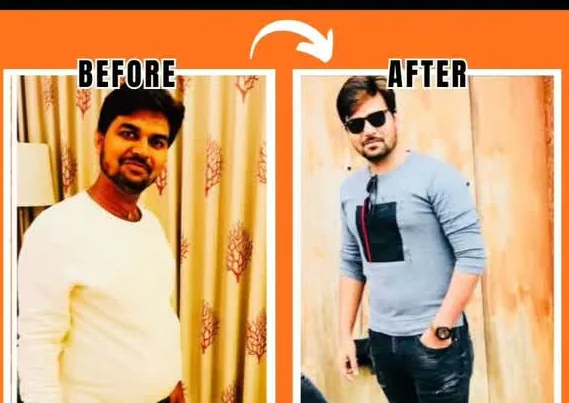
  • Naresh, a business owner, before and after three months of training at S R Gym

    Naresh

    Business owner

    3 months

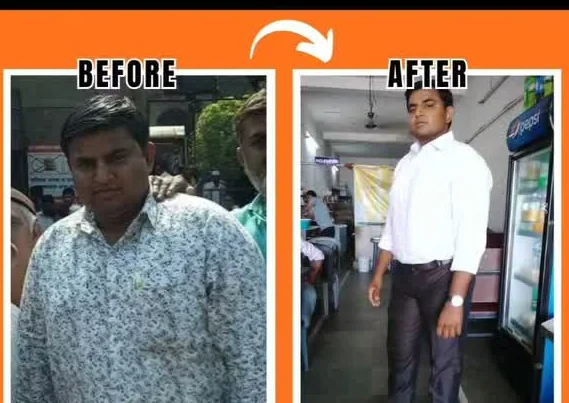
  • Harish, a business owner, before and after three months of training at S R Gym

    Harish

    Business owner

    3 months

Individual results that depend on starting point, consistency and any conditions being managed.

Training after 40: common questions

Is it too late to start weight training at 40, 50 or 60?
No. Muscle and strength respond to training at every age that has been studied, including in people well into their seventies and eighties. Starting later changes how carefully the first weeks are handled, not whether it works.
Is lifting weights safe for older adults?
Resistance training is widely recommended for older adults precisely because of what it protects: muscle mass, bone density, balance and the ability to get out of a chair unaided. It needs competent coaching and sensible loading. If you have a heart condition, uncontrolled blood pressure, osteoporosis or a recent injury, get medical clearance first and bring the advice with you.
What is special population training?
It is training designed for people whose circumstances need accounting for, including older adults and people managing health conditions. Brijesh Joshi holds a special population training certificate from Dr Mahesh Kumar's Medical Institute, which is reproduced on the credentials page.
I have diabetes or high blood pressure. Can I train?
Usually yes, and exercise is often part of the medical advice for both. It needs to be coordinated: tell your doctor you intend to train, ask what to watch for, and tell your coach what they said. Programme, timing around medication and intensity all change with that information.
Why does muscle matter more as you get older?
Adults lose muscle steadily from around their thirties unless something is done about it, and that loss is what eventually makes stairs, shopping bags and standing up from a low chair difficult. Resistance training is the most direct way to slow and partly reverse it.

General information rather than medical advice. If you are managing a health condition or have been inactive for years, speak to a doctor before starting and bring their advice to your first session.

Come in and talk it through

Bring whatever your doctor has told you. Call +91 98790 69960.