
S R Gym Adajan
3rd floor, above Way Wait Restaurant, near Deepa Complex, Krishna Nagar Society, Kalpana Society Part-2, Choksi Wadi,Adajan, Surat, Gujarat 395009
- Mon–Sat
- 06:00 am – 10:00 pm
- Sunday
- Closed
- Google rating
- 4.6 from 28 reviews
The short answer
Exercise does not cure PCOS, and no trial has shown that it restores periods or fertility, so I will not promise you either of those. What it does do is measurable and worth having. Pooled across 22 randomised trials in the Journal of Obstetrics and Gynaecology Research in 2026, exercise improved insulin sensitivity in women with PCOS by a small and consistent amount, and the 2023 International Evidence-based Guideline asks for 250 minutes a week of moderate activity for weight management along with muscle strengthening on 2 non-consecutive days. At S R Gym in Adajan and Katargam I coach women towards those targets alongside the gynaecologist or endocrinologist treating the condition, never in place of them. The World Health Organization stated in January 2026 that healthy eating and physical activity matter for women with PCOS even where they do not lead to weight loss, and that is the most useful sentence I know for anyone whose scale has stopped moving.
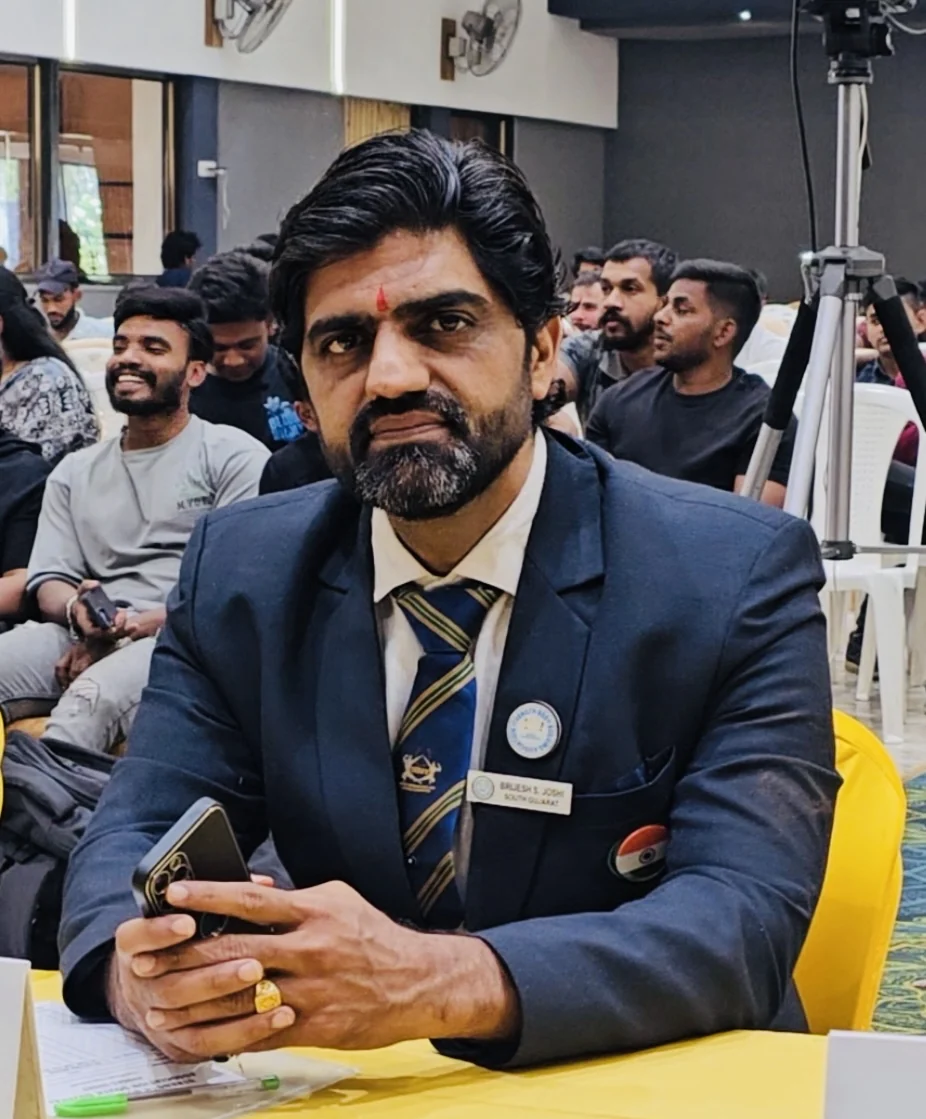
Written by Brijesh Joshi
Founder of S R Gym, Surat, coaching since 1999. President of the Strength Bodybuilding Association South Gujarat and a registered IBBFF judge. See credentials.
Most of the women who ask me about this arrive with a diagnosis from a gynaecologist, a prescription they are already taking, and a target in their head of losing 20 kg by a date that was never realistic. I would rather start from what the research actually shows, tell you honestly where it stops, and then explain what a gym in Surat can and cannot do for you around it.
There is a naming point to deal with first. In May 2026 an international consensus published in The Lancet renamed this condition polyendocrine metabolic ovarian syndrome, or PMOS, because the follicles seen on a scan are arrested rather than true cysts. Both names are in use across a three year transition, and almost everybody in Surat still says PCOS or PCOD, so those are the words I use here.
It is common enough that a gym in this city ought to discuss it competently. A nationwide study by the Indian Council of Medical Research reported a prevalence of 19.6 percent under Rotterdam criteria and 7.2 percent under the older NIH criteria, and among the women it identified with PCOS it found obesity in 43.2 percent and disordered blood lipids in 91.9 percent. That is why I treat this as a metabolic subject as much as a gynaecological one, in the same way I approach training with diabetes.
The clearest benefit training gives you is insulin sensitivity. A systematic review in the Journal of Obstetrics and Gynaecology Research in 2026 pooled 22 randomised trials covering 1,044 women and found that exercise improved insulin resistance measured by HOMA-IR by 0.21 points, with a confidence interval running from 0.14 to 0.29, along with small improvements in fasting insulin, BMI and waist-to-hip ratio. Those effects are real, repeatable and modest. The authors are open about their small samples and the wide variation between the programmes tested, and I would rather quote them accurately than round the numbers upward.
The most useful line I can give you comes from the World Health Organization fact sheet of January 2026, which says healthy eating and physical activity are important for all women with PCOS even where they do not lead to weight loss. Many women give up because the scale refuses to move for two months, and the metabolic benefit is happening whether or not that number changes. Exercise also helps most people's mood, which is a general population finding rather than a PCOS-specific one, and on sleep I found no PCOS-specific evidence at all, so I am leaving that claim alone.
No, and I want to be direct about that. The World Health Organization fact sheet of January 2026 states there is currently no cure for PCOS, and the NHS says the same, adding that treatments and lifestyle changes do help the symptoms.
I can go further than a disclaimer, because the trials have been counted. When researchers pooled 22 randomised trials in the Journal of Obstetrics and Gynaecology Research in 2026, exercise showed no significant improvement in menstrual regularity, hirsutism, ovarian volume or antral follicle count. It is fair to add that the authors of that review are open about their limited sample sizes and the variable quality of the trials they pooled, so the accurate word for menstrual regularity is unproven rather than ruled out. Fertility gets the same answer and matters more, since the World Health Organization describes the treatment for it as lifestyle changes, medicines or surgery to stimulate ovulation, all of them decisions made by a doctor.
So here is my position, written down so you can hold me to it. Your gynaecologist or endocrinologist treats the condition, I coach the training the guideline asks for, and I keep out of the diagnosis, the medication and the hormone numbers. Anyone in Surat offering to reverse your PCOS, restore your periods by a stated date, or fix your fertility with a workout plan should be asked to show you the study, and they will not be able to.
This is the table I wish somebody had shown me the first time a member brought me a PCOS report. The middle column is what the research says. The last column is what I will actually say to you across the desk.
| What people ask about | What the research shows | What I will tell you |
|---|---|---|
| Insulin sensitivity | Insulin sensitivity improves, with HOMA-IR falling by 0.21 points across the 22 trials pooled in the 2026 review | This is the clearest thing training gives you, and the effect is small and reliable rather than dramatic |
| Waist and body composition | This improves modestly, with small reductions in BMI and waist-to-hip ratio in the same 2026 pooled analysis | Expect your clothes to fit differently before the scale gives you anything worth celebrating |
| Meeting the activity targets | This is achievable, at 250 minutes a week of moderate activity and strengthening on 2 days, at a moderate evidence grade | This is the part a gym genuinely delivers, and it is entirely within your control |
| Benefit without weight loss | This is supported, since the World Health Organization said in January 2026 that activity matters even where weight does not fall | Keep training through the flat months. The scale is one measure out of several and it is the slowest one |
| Androgen levels | None of the reviews cited on this page pooled a result for testosterone, so I have no figure to give you | Your hormone numbers belong to your doctor, and I will not present training as a way to move them |
| Menstrual regularity | This was not demonstrated, with no significant difference across the 22 randomised trials pooled in 2026 | I will not promise you a period by a date, and I would question anybody who does |
| Fertility and ovulation | This was not demonstrated either. The pooled data was insufficient to quantify, and treatment is described as doctor-led | Your gynaecologist leads all of this. I build the training around whatever they decide |
| A cure | No cure exists, as stated by the World Health Organization in January 2026 and by the NHS | I refuse this outright, because nobody in Surat or anywhere else can sell you one |
| Hirsutism, ovarian volume, follicle count | There was no significant effect on any of these in the 22 trials pooled in the 2026 review | Training is the wrong tool for these, and your doctor has better ones |
| Diagnosis, medication, hormones | This sits entirely outside the scope of a gym | I do not comment on your prescription, and I will tell you to ask your doctor |
| Mood | This is a general population benefit, and I found no PCOS-specific evidence strong enough to quote | Exercise helps most people feel better, and I will not present that as a PCOS finding |
The 2023 International Evidence-based Guideline for PCOS, published in the Journal of Clinical Endocrinology and Metabolism, gives numbers rather than encouragement, which is why it is the backbone of every programme here. For adults aged 18 to 64 it asks for 150 to 300 minutes a week of moderate activity or 75 to 150 minutes of vigorous activity. Where weight loss or the prevention of weight regain is a goal, that rises to 250 minutes a week of moderate activity or 150 minutes of vigorous activity. It also asks for muscle strengthening on 2 non-consecutive days a week and for less time spent sitting, and it attaches a moderate evidence grade to all of that. I state the grade because you deserve to know how firm the ground is.
In an ordinary week at either branch that means three strength sessions of about 45 minutes, yoga and Surya Namaskar at the start of each one, and 25 to 30 minutes of steady cardio. Add a daily walk and you are inside the guideline range without living at the gym. If you have never trained before, the first 90 days guide describes how that gets built up rather than dropped on you at once.
On whether weight training is good for PCOS, here is the honest version. The guideline asks for strengthening work twice a week, and the general evidence for resistance training improving insulin resistance is good. The trials in women with PCOS specifically are small and few. A scoping review in Medical Sciences in 2022 described a striking paucity of randomised trials in this population, with resistance training arms of 7 to 25 participants that may have been insufficiently powered, and noted that where results reached statistical significance the size of the change was often negligible. So the defensible statement is that guidelines ask for strength work and it is sensible, and nobody can tell you it beats other kinds of training for PCOS.
You will also read almost everywhere that high intensity work is the worst exercise for PCOS because it raises cortisol and worsens insulin resistance. That deserves a careful answer. The NHS does advise avoiding high intensity exercise. The 2023 guideline does not say it. A review in JSAMS Plus in 2023 compared interval training against steady moderate training and found no statistically significant difference between them at low to very low certainty, and I could find no strong trial evidence for the cortisol mechanism in PCOS specifically. It is a popular claim rather than an established fact.
What I do in practice, and this is my coaching judgement rather than a research finding, is start every woman at moderate effort, watch how she recovers over three or four weeks, and pull the intensity back if hard sessions leave her flattened for two days afterwards. That is a decision about you and how your week actually goes rather than a rule about PCOS, and I distrust anybody who offers you one. Yoga comes up constantly here as an alternative to the gym, and I treat the two as one session, which is covered at length on yoga and gym training together.
Almost every woman who asks me about PCOS asks a version of the same question, which is how to lose 20 kg quickly. I understand where that target comes from and I am going to argue with it on evidence.
A meta-analysis in the Journal of Clinical Endocrinology and Metabolism in 2024 compared 28,922 women with PCOS against 258,619 controls across 20 studies. The odds of any eating disorder were 1.53 times higher in women with PCOS, binge eating disorder 2.09 times higher and bulimia nervosa 1.34 times higher, while anorexia nervosa was not elevated, and disordered eating scores were raised regardless of body weight. The authors rate certainty as moderate for any eating disorder and lower for the individual ones, they note the studies cannot establish which came first, and they say plainly that data from Asian countries is limited, which is a caveat worth carrying in Surat.
That is why I will not put you on 1,000 calories a day and a list of banned foods. This is a population already carrying a raised risk of a difficult relationship with food, and the 2023 guideline says the same in its own language, asking that eating disorders be considered in PCOS regardless of weight and noting how much weight stigma these women have already met in healthcare settings.
One more line from that guideline settles most of the diet argument. It states there is no evidence to support any one diet composition over another for metabolic, hormonal, reproductive or psychological outcomes, at a very low evidence grade. Keto, detox weeks and 21 day plans are therefore selling you a certainty the research does not have. We work instead with the food already in your kitchen, described in the Gujarati diet guide, and get the protein right, which is harder on a vegetarian diet and covered in protein for Indian vegetarians. For detailed medical nutrition planning I will refer you to a registered dietitian rather than improvise.
Fatigue is the complaint I hear most often, and it decides whether somebody is still training in month four. Some weeks you will arrive able to do everything on the sheet, and other weeks you will arrive flat, when a session written for the good week will break the bad one.
So the programme is written with a floor and a ceiling. The floor is the bad-day version, which is the warm-up, the main lift at a lighter load and a walk. The ceiling is the full session. Both of them count as having trained, and that distinction is the most useful thing I have found for keeping women in the gym past the eight week mark. This is a pattern I arrived at from coaching rather than from a trial, and the guideline does not address it, so please weigh it accordingly.
I would rather lose an enquiry than take money from somebody I cannot help, so the second list is written as seriously as the first.
Surat has three broad categories of place to train, and they are different products at prices that look closer than they are. I will describe the categories rather than name anybody.
A budget chain gym sells you access. The floor is large, the equipment is often good, the hours are long and the monthly price is low, so if you already know how to train and you simply need a room, that is an efficient purchase and I will say so plainly. What it rarely includes is the same qualified person watching how you move across three months, and for a woman with PCOS starting from no training history, that supervision is most of what you are buying.
A class or studio format sells you energy and a timetable, which solves the attendance problem better than anything else. The catch here is that the default intensity is high and one session runs for the whole room, and that is exactly the variable I want to control in your first two months.
A coached gym like this one costs more per month, asks you to attend at a fixed hour, and gives you one coach who knows your reports and adjusts the programme when your energy changes. It is the right choice when the training itself is what you need help with, and the wrong choice if what you want is a cheap room and total independence. There is a fuller comparison on how to choose a gym in Surat. One limitation on my side, stated up front: I am one coach across two branches, so I cannot take unlimited personal training clients, and if the hour you want is full I will tell you rather than squeeze you in.
I hold a special population training certificate from Dr Mahesh Kumar's Medical Institute, along with personal training certification from GFFI and a functional training qualification from EKFA, and every certificate is photographed on the credentials page. None of it makes me a doctor, and this page is written on that basis throughout.
Yoga or gym: the importance of both
Seven minutes on why yoga and weight training belong in the same session rather than being treated as a choice, which is the question I am asked most often about PCOD.
Membership starts at ₹1,700 for one month. For most women arriving with a PCOS or PCOD diagnosis I would suggest personal training as the starting point, since it means every session is supervised and the programme is built around your reports and your energy. That starts at ₹7,000 for one month. Full fees and branch timings are published in full.
Every number on this page is stated as the research found it, including where that number is smaller than a reader would hope and including the outcomes where exercise showed no effect at all. Nothing here is a treatment claim.
Journal of Obstetrics and Gynaecology Research, 52(9):e70477, 2026 · Systematic review and meta-analysis of 22 randomised trials
Across 1,044 women, exercise improved insulin resistance measured by HOMA-IR by 0.21 points, with a confidence interval running from 0.14 to 0.29, and produced small improvements in fasting insulin, BMI and waist-to-hip ratio. For menstrual regularity, hirsutism, antral follicle count and ovarian volume the authors reported no significant differences. The authors themselves note limited sample sizes, variable study quality and substantial variation between the exercise programmes tested.
Journal of Clinical Endocrinology and Metabolism, 108(10):2447, 2023 · International clinical guideline, 254 recommendations
For adults aged 18 to 64 the guideline asks for 150 to 300 minutes a week of moderate activity or 75 to 150 minutes of vigorous activity, rising to 250 minutes of moderate activity a week for weight loss and prevention of weight regain, with muscle strengthening on 2 non-consecutive days and reduced sedentary time. The evidence grade attached to this is moderate. The same guideline states there is no evidence to support any one diet composition over another, at a very low evidence grade.
Polycystic ovary syndrome fact sheet
World Health Organization, 2026 · Global health authority fact sheet, 22 January 2026
States plainly that there is currently no cure for PCOS, that the condition affects an estimated 10 to 13 percent of women of reproductive age, that up to 70 percent worldwide go undiagnosed, and that healthy eating and physical activity are important for all women with PCOS even where they do not lead to weight loss.
Time to load up: resistance training can improve the health of women with PCOS
Medical Sciences, 10(4):53, 2022 · Scoping review
The authors describe a striking paucity of randomised trials of resistance training in women with PCOS, with resistance arms of 7 to 25 participants that may be insufficiently powered, and note that in the majority of studies reporting statistical significance the size of the change from baseline was negligible. This is why this page recommends strength training on guideline and practical grounds rather than claiming it is the best exercise for PCOS.
Comparison of selected exercise training modalities in the management of PCOS
JSAMS Plus, 2023 · Systematic review and meta-analysis informing guideline development
Found no statistically significant differences between high intensity interval training and moderate continuous training on the outcomes examined, with certainty of evidence rated low to very low, and concluded there are insufficient trials to establish whether any single form of exercise is superior in PCOS.
Journal of Clinical Endocrinology and Metabolism, 109(12):3293, 2024 · Systematic review and meta-analysis of 20 studies
Comparing 28,922 women with PCOS against 258,619 controls, the odds of any eating disorder were 1.53 times higher, binge eating disorder 2.09 times higher and bulimia nervosa 1.34 times higher, while anorexia nervosa was not elevated. Disordered eating scores were raised regardless of body weight. Certainty was moderate for any eating disorder and low to very low for individual disorders, the studies were cross-sectional so the direction of cause cannot be established, and the authors note limited data from developing and Asian countries.
Prevalence, regional variation and associated risk factors of polycystic ovary syndrome in India
Indian Council of Medical Research nationwide study, 2024 · National multicentre cross-sectional study across five zones
Reported prevalence of 19.6 percent under Rotterdam criteria, 13.6 percent under AE-PCOS criteria and 7.2 percent under NIH criteria among Indian women of reproductive age. Among the women with PCOS, obesity was found in 43.2 percent and dyslipidemia in 91.9 percent, which is the reason this page treats PCOS as a metabolic subject as much as a gynaecological one.
Polyendocrine metabolic ovarian syndrome, the new name for polycystic ovary syndrome
The Lancet, 2026 · Multistep global consensus process, 56 organisations
Published on 12 May 2026, this consensus renamed the condition polyendocrine metabolic ovarian syndrome on the grounds that the follicles seen on a scan are arrested rather than true cysts, and that the old name obscured the metabolic features. Both names remain in use across a three year transition period.
I have written this page as general information, as a fitness coach holding a special population training certificate rather than a medical qualification. It is not medical advice, it can tell you nothing about your own case, and nothing on it should be used to change medication or to delay seeing a doctor. PCOS is diagnosed and treated by a gynaecologist or an endocrinologist, and everything described here is meant to sit alongside that care.
The first conversation costs nothing and it decides most of what comes after it. Call +91 98790 69960, or send a message and say what your doctor has told you so far.