
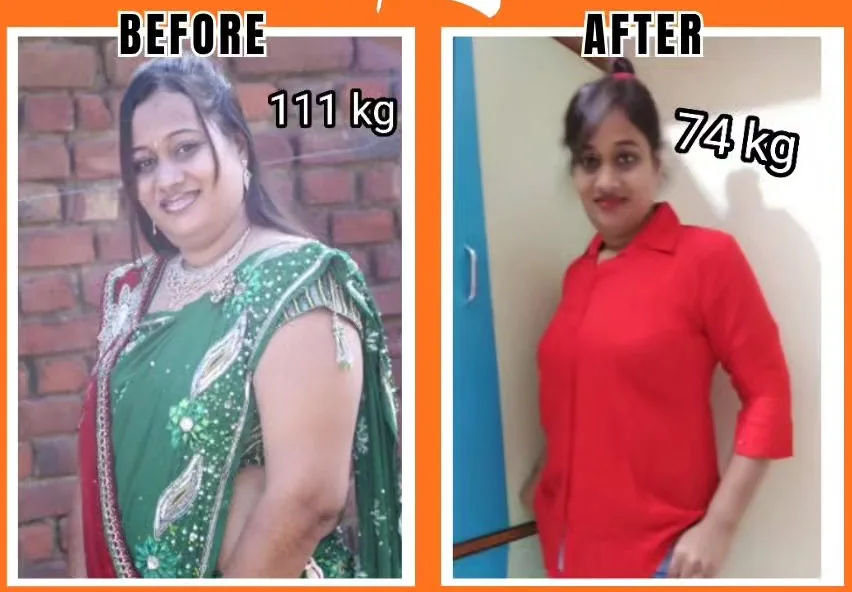
Pooja
Working professional
111 kg to 74 kg, 37 kg lost in five months.
5 months
Most people in this city have already tried. They have skipped dinner for a fortnight, walked every morning for a month, or followed a diet chart that asked them to stop eating the food their family cooks. The weight came off and then came back, which is the usual pattern when the method is something you were only ever going to sustain temporarily.
What follows is how it works when it lasts, written by a coach who has run gyms in Surat since 1999.
What you eat decides whether you lose weight. Fat loss requires taking in less energy than you use, and no arrangement of exercise overcomes a diet that is not adjusted. This is why people who train hard for six months and change nothing about their food often look much the same at the end.
What you do in the gym decides what you lose. In a calorie deficit the body will draw on both fat and muscle. Resistance training gives it a reason to keep the muscle, which is what leaves you looking different rather than simply smaller, and it is also what keeps your metabolism from dropping as far as it otherwise would.
Cardio has a place, mostly for heart health and for burning some additional energy. It sits third on this list rather than first, which is the reverse of how most people approach it.
A Gujarati thali is vegetables, pulses, dairy and grain, and there is very little wrong with it. The same plate can come to 1,600 calories or 2,600 depending on decisions nobody is measuring, and the surplus almost always sits in the same four places: cooking oil, sugar in tea and in the dal, fried farsan in the evening, and the last two rotla eaten because they were there.
Adjusting those four leaves the food recognisable. Replacing the whole diet with boiled vegetables produces faster results for eleven days and then produces nothing, because nobody keeps it up. Our full guide to losing fat on a Gujarati diet works through this with a sample day and portion sizes.
Around half a kilogram a week is a rate most people can hold while training properly and still enjoying their food. That works out at roughly two kilos a month, so someone carrying twenty kilos of excess weight should be planning in terms of eight to ten months rather than eight to ten weeks.
Faster is possible and usually costs you muscle, energy and adherence. The published member results below took between 75 days and eight months, and the people in them were training throughout.
Each of these members gave permission to appear here, and each entry carries the time their change actually took.
Working professional
111 kg to 74 kg, 37 kg lost in five months.
5 months

Homemaker
6 months
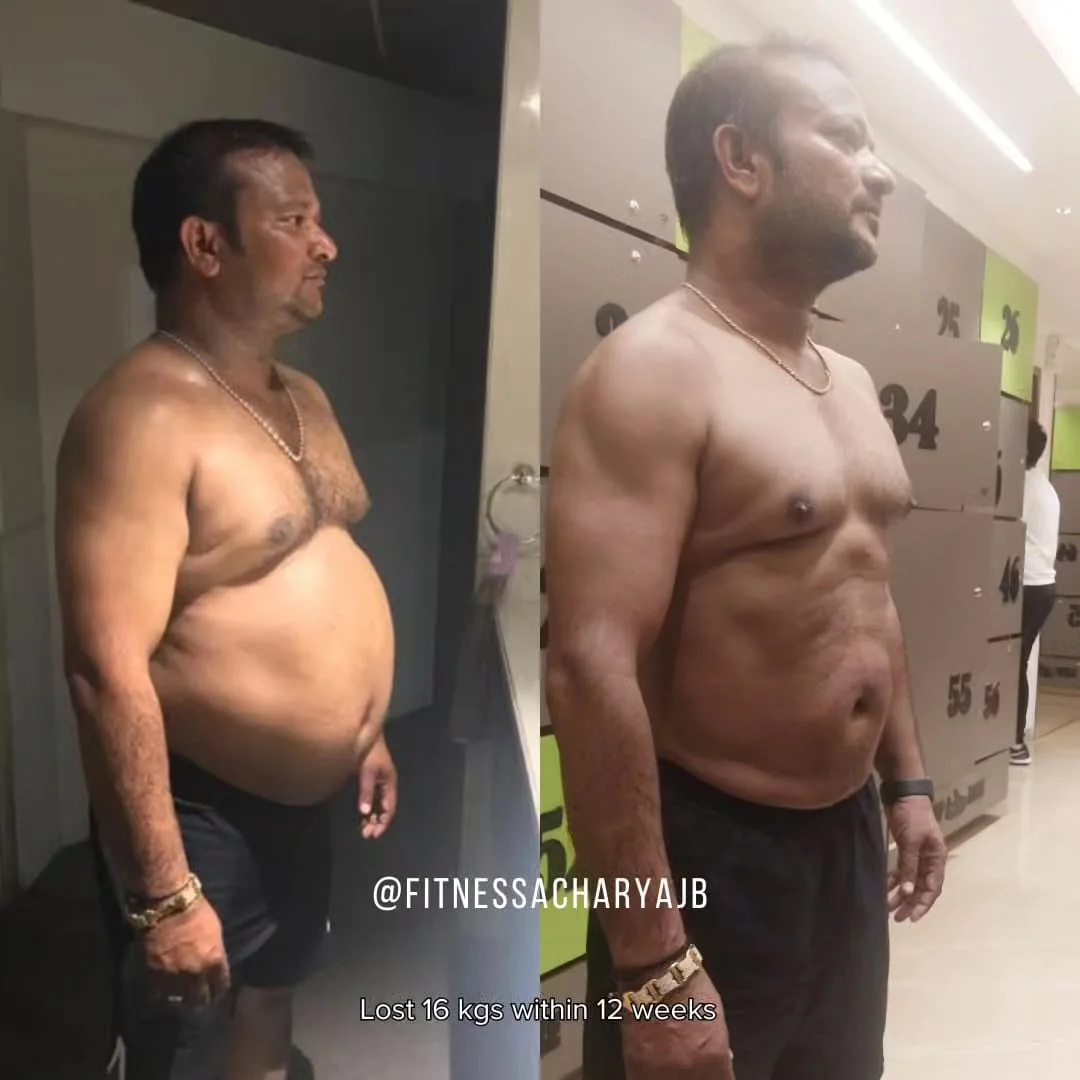
Real estate developer, Surat
Lost 16 kg and went from XXL to M in clothing. He reported that his cholesterol returned to the normal range, his energy improved and his breathing difficulty on stairs resolved.
12 weeks
These are individual results and are not a guarantee of what any other member will achieve. What happens for you depends on your starting point, your consistency and any medical conditions you are managing.
The city offers several routes, and they suit different situations.
What we do is the third of those. Fat loss coaching at S R Gym sets out how the programme runs and what it costs.
This page is general information rather than medical advice. Please speak to a doctor before changing how you eat or train if you have diabetes, thyroid disease, PCOS, heart disease or high blood pressure, if you are pregnant or recently postpartum, or if you take medication that affects appetite or weight. Tell your coach as well, so that the programme accounts for it.
Covering the same ground as this page, in Hindi, in his own words.
The best way to lose weight
A full beginner's guide to fat loss, in Hindi. Ten minutes.
Tell Brijesh where you are starting from and how many days a week you can realistically train.